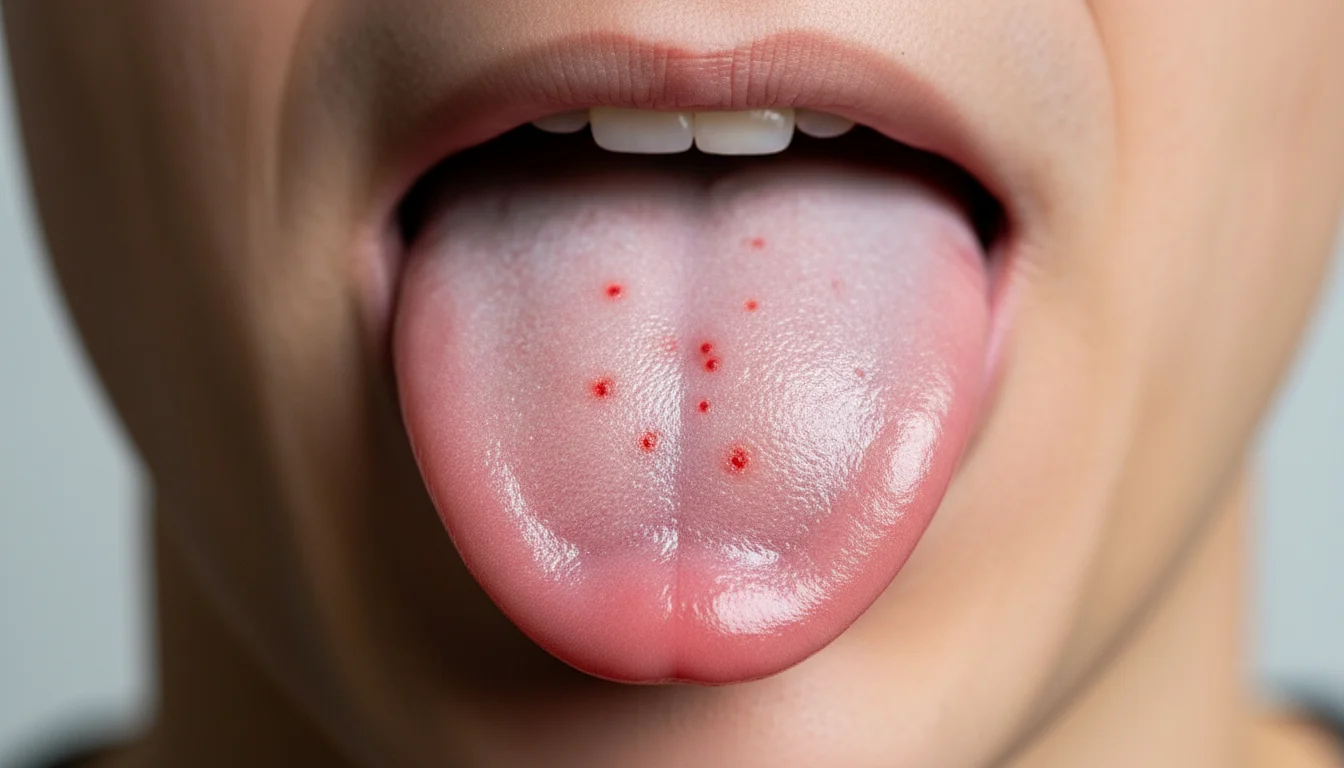
Noticing a why is my tongue white with red spots can be worrying, especially if it appears suddenly or does not go away. Many people search for answers when they see a white coating on the tongue with red dots, wondering if it is a sign of infection, poor health, or something serious.
In most cases, a tongue that is white with red patches is linked to common and treatable causes such as dehydration, oral hygiene issues, mild infections, or vitamin deficiencies. However, sometimes it can point to conditions like oral thrush, geographic tongue, or tongue inflammation with white coating.
This article explains why your tongue is white with red spots, what it may mean for your health, and whilst you need to take action. Overall, the goal is to give you clear, simple, and reliable information you can trust.
What Does a White Tongue With Red Spots Mean?
A white tongue with red bumps or spots usually means there is a change on the surface of the tongue. In many cases, this change can involve the buildup of debris, bacteria, or fungi, along with inflammation underneath.
The white color often comes from:
- Dead cells
- Food particles
- Plaque buildup on the tongue
- Fungal or bacterial growth
The red spots or patches may appear when the tongue surface becomes irritated, inflamed, or loses its normal texture. Together, this creates a tongue discoloration that looks white and red.
In many cases, this condition is temporary. But if it lasts for weeks or comes with pain, it should not be ignored.
Normal Tongue vs. Abnormal Tongue Changes
A healthy tongue is usually:
- Pink in color
- Moist
- Even in texture
- Free from thick coatings or painful spots
An abnormal tongue may show:
- A white coating with red spots
- Swelling or soreness
- A burning sensation on the tongue
- Bad breath linked to white tongue
- Sensitivity while eating or drinking
These changes are signs that something is affecting your oral health or overall body health.
Common Causes of a White Tongue With Red Spots

There are several reasons why you might notice red spots on the tongue with white coated surface. Some causes are harmless, while others may need treatment.
Oral Thrush (Fungal Infection on the Tongue)
One of the most common causes is oral thrush, also known as oral candidiasis. This is a fungal infection caused by an overgrowth of yeast.
Common signs include:
- Thick white patches on the tongue
- Red, sore areas underneath
- A swollen tongue with white coating
- Pain or discomfort while eating
Oral thrush white tongue is more common in:
- People using antibiotics
- Individuals with weak immunity
- Denture wearers
- Babies and older adults
Geographic Tongue Symptoms
Geographic tongue is a harmless condition where, in some cases, red patches appear on the tongue with light or white borders.
Features include:
- Smooth red spots that change location
- A map-like appearance
- Mild burning or sensitivity
- No serious health risk
This condition explains why some people see a white tongue with red patches that come and go.
Strawberry Tongue Causes
A strawberry tongue looks red and bumpy, sometimes with a white coating at first.
It may be linked to:
- Fever
- Infections
- Allergic reactions
- Inflammation of the tongue (glossitis)
As the white layer clears, the red bumps, in turn, become more visible.
Vitamin and Mineral Deficiencies
In general, low levels of nutrients can affect tongue health. Common deficiencies include:
- Vitamin B12 deficiency tongue
- Iron deficiency tongue symptoms
These may cause:
- Red, painful spots
- A sore tongue with white patches
- Cracks or swelling
- Sensitivity or burning
Poor Oral Hygiene and Dehydration
Simple daily habits matter more than most people realize.
Causes include:
- Poor oral hygiene tongue care
- Not cleaning the tongue
- Dehydration causing white tongue
- Dry mouth or mouth breathing at night
As a result, these factors lead to plaque buildup on the tongue, allowing bacteria to grow and cause irritation.
Symptoms That May Appear Along With White Tongue and Red Spots

A white tongue with red spots can appear alone, but it sometime comes with other symptoms. These signs can help you understand whether the cause is mild or needs medical attention.
Common symptoms include:
- Sore tongue with white patches
- Burning sensation on the tongue
- Painful red spots on the tongue
- Swollen tongue with white coating
- Tongue ulcers and redness
- Bad breath linked to white tongue
- Dry or sticky feeling in the mouth
If the tongue feels painful, cracked, or sensitive to hot or spicy foods, inflammation is usually present. Symptoms that last longer than two weeks should not be ignored.
Is a White Tongue With Red Spots Serious?
In many cases, a tongue that is white with red bumps is not serious and clears up with simple care. However, the cause determines whether treatment is needed.
When It’s Usually Harmless
The condition is often mild when caused by:
- Dehydration or dry mouth
- Temporary illness or fever
- Poor oral hygiene
- Mouth breathing at night
- Smoking or alcohol use
In most cases, these causes often improve with hydration, better oral care, and lifestyle changes.
When to See a Doctor or Dentist
You should seek medical advice if:
- The white coating does not go away after 2 weeks
- Pain or swelling gets worse
- You notice bleeding or deep cracks
- Eating or swallowing becomes difficult
- The condition appears after antibiotics
- You have fever or feel unwell
In some cases, these signs may point to oral candidiasis symptoms, glossitis tongue, or other infections that need treatment.
How Is a White Tongue With Red Spots Diagnosed?
Diagnosis usually starts with a simple oral test. During this process, a doctor or dentist looks at the color, texture, and pattern of the tongue.
Physical Examination
During the exam, they may check for:
- Thickness of the white coating
- Location of red spots or patches
- Signs of inflammation or infection
- Swelling or ulcers
In many cases, this is enough to identify common causes like geographic tongue or poor oral hygiene.
Lab Tests or Swabs (If Needed)
Tests may be done if:
- Infection is suspected
- Symptoms are severe or long-lasting
- There is concern about leukoplakia tongue or deficiency
Blood tests may also be ordered to check for vitamin B12 or iron deficiency.
Treatment Options for White Tongue With Red Spots
Treatment depends on the underlying cause. In most cases, however, it improves with simple steps.
Medical Treatments
A doctor may recommend:
- Antifungal treatment for tongue infections
- Supplements for vitamin or iron deficiency
- Medication to reduce inflammation
- Treatment for bacterial infection in the mouth
Following the full course of treatment is important to prevent recurrence.
Home Remedies and Self-Care
In addition, for mild cases, self-care can be very effective.
Helpful steps include:
- How to clean white tongue gently every day
- Using a soft tongue scraper (tongue scraper benefits include reducing bacteria)
- Drinking enough water
- Avoiding smoking and alcohol
- Eating a balanced diet
Overall, these home remedies for white tongue help restore a healthy mouth environment.
How to Prevent White Tongue and Red Spots
Prevention focuses on daily habits and overall health.
Maintain Good Oral Hygiene
- Brush teeth twice daily
- Clean the tongue gently
- Visit the dentist regularly
Healthy Diet and Hydration
- Drink plenty of water
- Eat foods rich in iron and vitamin B12
- Limit sugary and processed foods
Avoid Irritants
- Reduce smoking
- Avoid excessive alcohol
- Limit very spicy foods
Consequently, these steps reduce tongue inflammation with white coating and lower the chance of recurrence.
White Tongue With Red Spots in Children vs Adults
- White tongue in children is often linked to oral thrush or fever
- White tongue in adults may be related to lifestyle, smoking, or deficiencies
- White tongue during fever and tongue changes during illness are usually temporary
- White tongue after antibiotics is common due to yeast overgrowth
Children and adults should both be checked if symptoms persist.
Final Thoughts
A white tongue with red spots is common and usually treatable. In many cases, however, it can result from infections, vitamin deficiencies, dehydration, or lifestyle habits. Therefore, paying attention to symptoms and practicing good oral care often resolves the issue.
If your tongue discoloration appears white and red and does not improve, or if pain and swelling increase, knowing when to see a doctor for tongue problems is key to protecting your health.
FAQS
However, brushing teeth alone does not remove tongue buildup. As a result, bacteria and debris can remain on the tongue surface, causing a white coating.
Additionally, illness, fever, dehydration, and medications can change mouth bacteria, leading to a white tongue.
In general, soreness often points to inflammation, infection, or nutrient deficiency.
Cracks may form due to dry mouth, dehydration, or vitamin deficiency.
In many cases, a yellow tint often comes from bacterial buildup, smoking, or poor oral hygiene.
