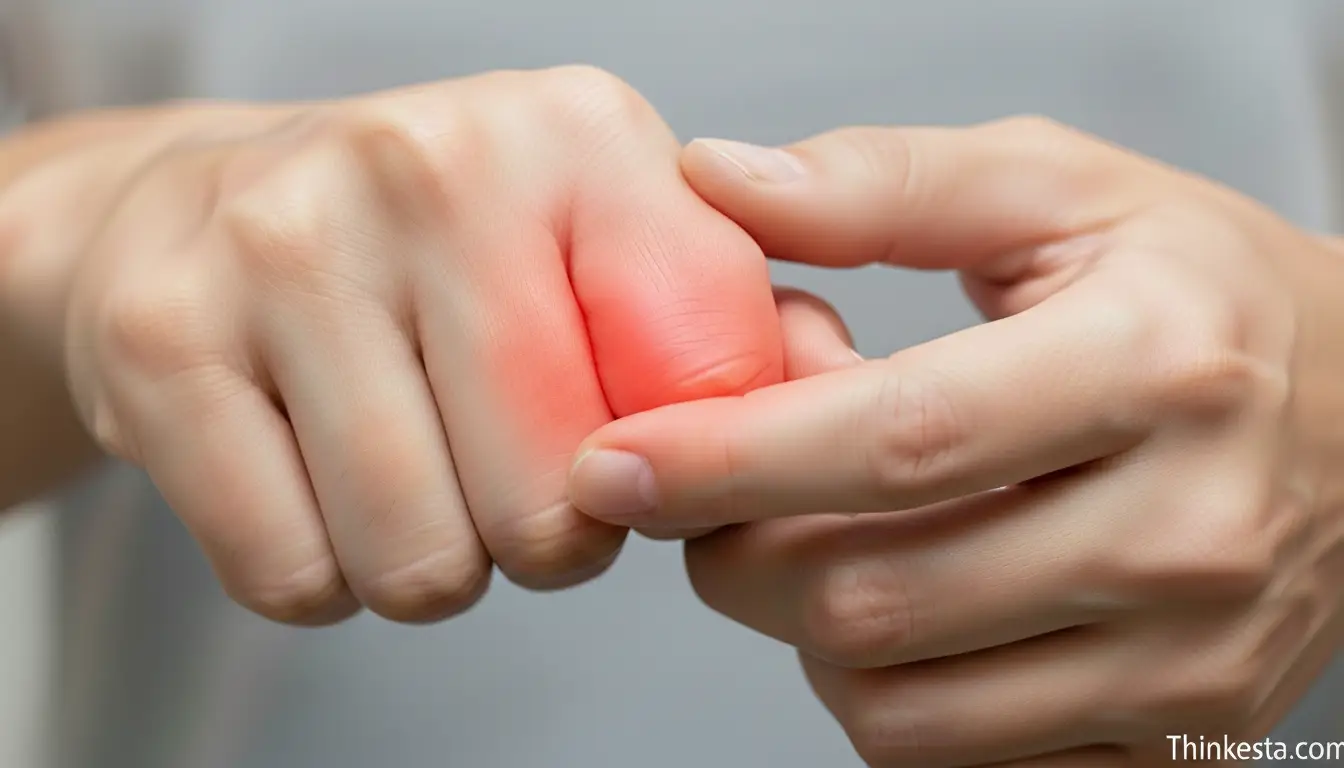
if you’ve ever questioned, “why do my hand joints ache?”, you’re not alone. Aching finger joints, sore knuckles, or stiff fingers in the morning are very common—especially among health-conscious adults. In fact, many people experience these symptoms at some point in their lives.
In many cases, hand joint pain causes are harmless and linked to overuse. However, persistent hand pain, swollen hand joints, or a burning sensation in fingers may signal something more serious like arthritis, nerve compression, or even a nutrient deficiency.
The key is understanding what your symptoms mean. So, let’s break it down why do my hand joints ache? clearly and practically.
Common Causes of Hand Joint Pain (Inflammation, Arthritis & Injury)
Hand pain can start suddenly or increase slowly over time. Some people feel pain in finger joints when bending. Meanwhile, others notice finger joint swelling or joint stiffness in hands that gets worse in cold weather.
Below are the most common causes.
Osteoarthritis in Hands (Wear-and-Tear Arthritis)

One of the leading causes of chronic hand pain and you questioned: why do my hand joints ache? is Osteoarthritis. It’s often called degenerative joint disease because it develops from cartilage breakdown over time.
Cartilage cushions your joints. When it wears down:
- Bones rub together
- Bone spurs in fingers may form
- Joint space narrowing appears on X-ray for arthritis diagnosis
Common symptoms include:
- Stiff fingers in the morning
- Sore knuckles
- Reduced grip strength
- Joint deformity in hands (in later stages)
In the early stages—often called stage 1 arthritis in fingers—you may only notice mild discomfort and slight swelling.
Aging and joint stiffness often go hand in hand. However, repetitive hand movements and obesity and joint inflammation can speed up the process.
Rheumatoid Arthritis (Autoimmune Joint Disorder)

Another major cause is Rheumatoid Arthritis. And you start thinking why do my hand joints ache? unlike osteoarthritis, this is an autoimmune joint disorder. That means the immune system attacks healthy joint tissue.
This leads to:
- Inflammation in hand joints
- Swollen hand joints
- Persistent hand pain
- Early signs of arthritis in hands
Many people experience:
- Severe stiff fingers in the morning
- Symmetrical pain (both hands affected)
- Fatigue and other autoimmune disease symptoms
Doctors often confirm diagnosis through blood tests for arthritis. Specifically, these check inflammatory markers ESR CRP and other chronic inflammation markers.
If untreated, inflammatory arthritis can cause joint deformity in hands and permanent damage.
Repetitive Strain Injury & Overuse
occasionally the answer to “why do my knuckles hurt?” is simple: overuse.
Typing related hand pain, gaming, texting, or manual labor can lead to repetitive strain injury. As a result, over time, this causes:
- Tendonitis in hand
- Wrist inflammation
- Overuse injury fingers
- Sudden hand joint pain
You may also notice:
- Hand weakness
- Loss of grip strength
- Pain that improves with rest
Improving ergonomic hand positioning and taking breaks can significantly reduce symptoms.
Injury, Gout & Other Conditions
Minor trauma can also cause aching finger joints. Even small ligament strains may trigger finger joint swelling.
However, other medical conditions may be involved:
- Gout – caused by uric acid crystals in joints, often leading to sudden severe pain (gout in fingers).
- Psoriatic Arthritis – may include psoriatic arthritis symptoms like skin rash plus joint pain.
- Systemic Lupus Erythematosus – linked to lupus joint pain and other systemic autoimmune disease symptoms.
These conditions may also involve metabolic disorders and joint pain. Therefore, ongoing symptoms should never be ignored.
Vitamin & Mineral Deficiencies That Cause Hand Joint Pain
However, sometimes the problem isn’t wear and tear—it’s what your body is missing.
Nutrient deficiency and inflammation are closely connected. When your body lacks essential vitamins or minerals, joint health suffers.
Vitamin D Deficiency & Bone Pain
Low vitamin D levels can cause vitamin D deficiency joint pain. This may feel like:
- Deep aching finger joints
- Calcium deficiency bone pain
- Increased joint stiffness in hands
Vitamin D supports bone strength and immune balance. Consequently, without it, inflammation in hand joints may worsen.
Vitamin B12 Deficiency & Nerve Symptoms
Vitamin B12 deficiency symptoms often affect the nerves.
You might notice:
- Numbness in fingers
- Tingling in hands
- Burning sensation in fingers
- Median nerve pain
Since vitamin B6 and nerve health are closely linked, low B6 may also contribute to nerve compression in wrist and related discomfort.
Magnesium & Calcium Imbalance
Additionally, magnesium deficiency muscle pain and calcium deficiency bone pain can both mimic arthritis.
These minerals help regulate:
- Muscle contraction
- Nerve signals
- Joint lubrication
Low levels may increase chronic hand pain and joint stiffness.
What Vitamin Deficiencies Cause Carpal Tunnel?
Carpal Tunnel Syndrome happens while the median nerve becomes compressed inside the wrist.
Common carpal tunnel syndrome symptoms include:
- Numbness in fingers
- Tingling in hands
- Hand weakness
- Loss of grip strength
Vitamin B6 deficiency may worsen nerve compression in wrist. In addition, fluid retention joint pain and swelling in hands pregnancy can increase risk of carpal tunnel during pregnancy.
Early Signs of Arthritis in the Hands (Stage 1 Symptoms)
Many people ignore the early signs. However, catching arthritis early can slow damage and protect joint function.
In the beginning, symptoms are mild. At this point, this stage is often called stage 1 arthritis in fingers.
Morning Stiffness & Reduced Flexibility
One of the earliest warning signs is stiff fingers in the morning.
You may notice:
- Joint stiffness in hands lasting 30–60 minutes
- Difficulty gripping objects
- Mild pain in finger joints when bending
In early osteoarthritis in hands, stiffness improves with movement. However, in rheumatoid arthritis symptoms, stiffness often lasts longer and feels more intense.
Mild Swelling & Tenderness
Early inflammation in hand joints may cause:
- Slight finger joint swelling
- Puffy knuckles
- Tenderness when pressing the joint
At this stage, cartilage breakdown has started, but joint deformity in hands is not yet visible.
Doctors may detect joint space narrowing on an X-ray for arthritis diagnosis. Blood tests for arthritis may also measure inflammatory markers ESR CRP if inflammatory arthritis is suspected.
Weak Grip & Clicking Sensation
As joints weaken, you might experience:
- Hand weakness
- Loss of grip strength
- Clicking or grinding sounds
These are early signs of degenerative joint disease. Over time, bone spurs in fingers may form if the condition progresses.
If you notice persistent hand pain for more than a few weeks, it’s wise to consult a healthcare provider.
What Diseases Start With Hand Joint Pain?
Sometimes, aching finger joints are the first symptom of a larger condition.
Here are diseases that often begin in the hands.
Rheumatoid Arthritis
As mentioned earlier, Rheumatoid Arthritis is an autoimmune joint disorder.
It typically causes:
- Swollen hand joints
- Severe stiff fingers in the morning
- Chronic hand pain
- Symmetrical joint involvement
In addition, autoimmune disease symptoms like fatigue and low-grade fever may appear.
Osteoarthritis
Osteoarthritis usually develops gradually.
It is strongly linked to:
- Aging and joint stiffness
- Repetitive hand movements
- Overuse injury fingers
Symptoms often include sore knuckles, pain in finger joints when bending, and visible joint deformity in hands in later stages.
Gout
Gout is caused by uric acid crystals in joints.
It may lead to:
- Sudden hand joint pain
- Red, swollen finger joint
- Severe tenderness
In fact, gout in fingers can be extremely painful, even with light touch.
Lupus
Systemic Lupus Erythematosus may begin with lupus joint pain.
Common features include:
- Inflammation in hand joints
- Fatigue
- Skin rashes
- Other autoimmune disease symptoms
Because lupus affects multiple organs, early diagnosis is important.
Psoriatic Arthritis
The Psoriatic Arthritis is linked to psoriasis.
Psoriatic arthritis symptoms may include:
- Swollen entire fingers (sausage-like appearance)
- Joint stiffness
- Nail changes
It is another form of inflammatory arthritis that requires medical care.
Why Do My Hand Joints Ache During Pregnancy?
Many women experience hand pain during pregnancy. This is usually temporary but uncomfortable.
Hormonal shifts are the main cause. Specifically, the relaxin hormone effects loosen ligaments to prepare the body for giving birth. However, this can also affect the hands.
In addition:
- Fluid retention joint pain increases pressure in joints
- Swelling in hands pregnancy can compress nerves
- Carpal tunnel during pregnancy becomes more common
As a result, you may feel:
- Numbness in fingers
- Tingling in hands
- Median nerve pain
- Wrist inflammation
The good news? Symptoms usually improve after delivery as hormone levels normalize.
When Should You See a Doctor?
Occasional aching finger joints are common. however, you should seek medical advice in case you experience:
- Persistent hand pain lasting more than 2–3 weeks
- Severe swollen hand joints
- Joint deformity in hands
- Fever with joint pain
- Sudden loss of grip strength
Doctors may recommend:
- Blood tests for arthritis
- Testing inflammatory markers ESR CRP
- X-ray for arthritis diagnosis
- Imaging to assess joint space narrowing
Early evaluation can prevent long-term damage.
Natural Remedies & Lifestyle Tips to Relieve Hand Joint Pain
If you’re dealing with chronic hand pain and wondered why do my hand joints ache? or occasional aching finger joints, the good news is that easy lifestyle changes can help. While medical treatment is sometimes necessary, many people find relief through daily habits.
Let’s look at practical, science-backed strategies.
Follow an Anti-Inflammatory Diet
Inflammation in hand joints often worsens with poor diet. Therefore, focus on foods that reduce inflammation.
An anti-inflammatory diet for arthritis includes:
- Fatty fish (rich in omega-3 for joint pain)
- Leafy greens and berries
- Nuts and seeds
- Olive oil
In addition, turmeric for joint pain may help due to its natural anti-inflammatory properties.
Try to reduce:
- Processed foods
- Excess sugar
- Refined carbohydrates
Moreover, these foods can increase obesity and joint inflammation and worsen joint stiffness in hands.
Consider Supplements for Joint Health
Certain supplements may support joint structure and nerve function.
Some options include:
- Vitamin D (helps prevent vitamin D deficiency joint pain)
- Vitamin B12 and vitamin B6 and nerve health support
- Magnesium (for magnesium deficiency muscle pain)
- Calcium (for calcium deficiency bone pain)
- Collagen supplements for joints
However, always consult a healthcare professional before starting supplements—especially if you have inflammatory arthritis or metabolic disorders and joint pain.
Do Hand Exercises for Pain Relief
Movement keeps joints lubricated. Even if you have stiff fingers in the morning, gentle activity helps.
Try:
- Finger stretching exercises
- Squeezing a soft stress ball
- Wrist circles
- Grip-strengthening routines
Regular hand exercises for pain relief can improve:
- Loss of grip strength
- Hand weakness
- Joint stiffness in hands
Consistency matters more than intensity.
Improve Ergonomics & Reduce Overuse
In fact, repetitive hand movements are a major cause of tendonitis in hand and repetitive strain injury.
To protect your joints:
- Maintain proper ergonomic hand positioning
- Adjust keyboard and mouse height
- Take breaks every 30–60 minutes
- Avoid prolonged typing related hand pain triggers
However, small adjustments can prevent overuse injury fingers and reduce persistent hand pain.
Use Heat & Cold Therapy
Simple therapies can reduce discomfort quickly.
- Cold therapy for joint pain reduces swelling and inflammation in hand joints.
- Heat therapy for stiff joints improves blood flow and eases stiffness.
Use cold packs during flare-ups. Use heat when stiffness is the main issue.
Final Thoughts
If you keep asking, “why do my hand joints ache?”, your body may be signaling inflammation, overuse, or an underlying circumstance.
The key is to:
- Monitor symptoms
- Address lifestyle risk factors
- Support your body with proper nutrition
- Seek medical advice if pain becomes persistent
Early attention prevents long-term joint damage. Furthermore, with the right care, most causes of hand joint pain can be managed effectively.
FAQS
It often means there is inflammation in hand joints. Common hand joint pain causes include osteoarthritis in hands, rheumatoid arthritis symptoms, repetitive strain injury, or nutrient deficiency and inflammation. Sometimes it may also signal gout in fingers or an autoimmune joint disorder.
Several deficiencies may contribute, including:
Vitamin D deficiency joint pain
Vitamin B12 deficiency symptoms (nerve-related pain)
Magnesium deficiency muscle pain
Calcium deficiency bone pain
Early signs of arthritis in hands include:
Stiff fingers in the morning
Mild finger joint swelling
Pain in finger joints when bending
Loss of grip strength
Hand pain during pregnancy is usually due to:
Relaxin hormone effects
Fluid retention joint pain
Swelling in hands pregnancy
Carpal tunnel during pregnancy
Vitamin B6 and vitamin B12 deficiencies may worsen nerve compression in wrist. While they don’t directly cause the condition, they can aggravate carpal tunnel syndrome symptoms such as median nerve pain and hand weakness.
Stage 1 arthritis in fingers is the earliest phase of degenerative joint disease. At this stage:
Cartilage breakdown begins
Joint space narrowing may appear on imaging
Symptoms are mild
Several conditions may begin with hand joint pain, including:
Rheumatoid arthritis
Osteoarthritis
Gout
Psoriatic arthritis
Systemic lupus erythematosus
