Many people trying to live a healthier life ask the same question: Is Diet Coke as unhealthy as normal Coke?
At first glance, Diet Coke seems like the better choice. It has zero calories, no sugar, and is often marketed as a smarter option for weight control. Regular Coke, on the other hand, is clearly high in sugar and calories. But health is not only about calories.
Health enthusiasts now worry about artificial sweeteners in soda, Diet Coke health effects, and the long-term risks of soda consumption. Some studies suggest diet soda may affect metabolism, gut health, or cravings, while others highlight the clear dangers of high sugar intake in regular soda.
In this article, we’ll compare Regular Coke vs Diet Coke using science, ingredients, and real health impacts—so you can make an informed choice. and understand Is Diet Coke as unhealthy as normal Coke?
What’s Inside Normal Coke? (Ingredients Breakdown)

To better understand the health risks, we must first examine the ingredients in regular Coke and how they affect the body.
Sugar Content and Calories
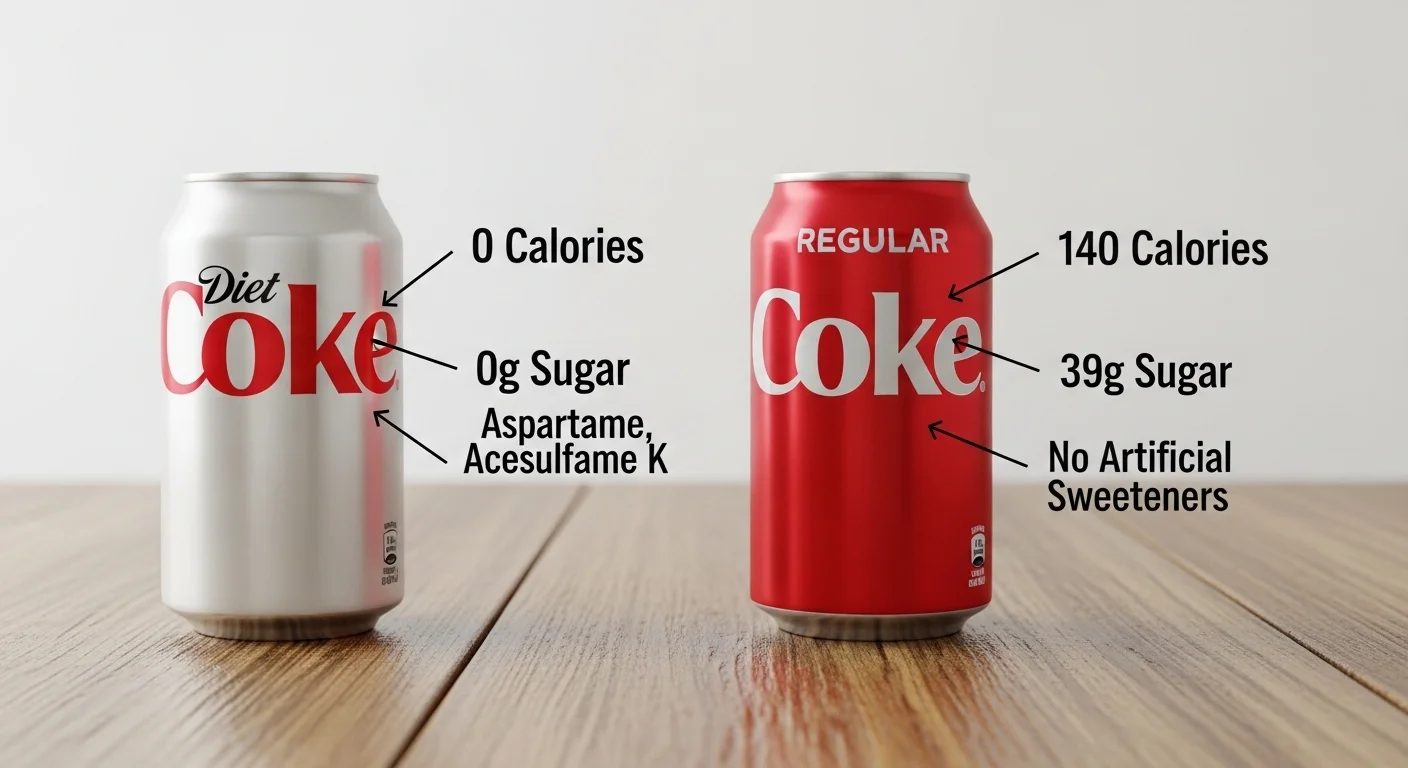
One can of regular Coke contains:
- Around 39 grams of sugar
- About 140 calories
- Mostly from high fructose corn syrup or sugar
This high sugar load can:
- Spike blood sugar levels
- Increase insulin response
- Contribute to soda and weight gain
As a result, drinking regular Coke daily makes it easy to exceed the recommended sugar limit, thereby increasing the risk of obesity and type 2 diabetes.
Caffeine and Additives
Regular Coke also contains:
- Caffeine, which can growth alertness but additionally lead to dependence
- Additionally, phosphoric acid is linked to tooth enamel erosion.
- In addition, preservatives and flavorings are used.
Furthermore, the caffeine content in Coke, combined with sugar, can reinforce soft drink addiction, making moderation harder.
How Normal Coke Affects the Body
Regular Coke is strongly linked to several health issues:
- Rapid blood sugar impact
- Higher insulin response
- Increased risk of regular Coke health risks like fatty liver and metabolic syndrome
- Tooth decay and bone mineral loss
Consequently, long-term soda consumption of sugary drinks is consistently associated with poor health outcomes.
What’s Inside Diet Coke? (Ingredients Breakdown)
Diet Coke removes sugar—but replaces it with something else. Understanding Diet Coke ingredients is key to judging its safety.
Artificial Sweeteners (Aspartame / Acesulfame-K)
Diet Coke uses non-nutritive sweeteners, mainly:
- Aspartame
- Sometimes acesulfame potassium
These sweeteners provide sweetness without calories; therefore, Diet Coke is classified as a zero-calorie beverage.
Aspartame safety has been studied for decades. Major health authorities say it is safe within daily limits, but debate continues about possible long-term effects.
Calories, Carbs, and Caffeine
Diet Coke contains:
- Zero calories
- No sugar or carbs
- Similar caffeine content to regular Coke
This makes Diet Coke appealing for:
- People managing weight
- People concerned about Diet Coke vs Coke calories
However, calorie-free does not always mean risk-free.
How Diet Coke Affects the Body
Research on diet soda metabolism shows mixed results:
- It does not directly raise blood sugar
- But it may affect insulin response in some people
- It can increase cravings for sweet foods
Possible Diet Coke side effects include:
- Increased appetite
- Changes in gut bacteria
- Confusion in hunger signals
This is why many experts question whether sugar-free soft drinks truly support long-term health.
Diet Coke vs Normal Coke: Nutritional Comparison
This side-by-side comparison helps answer one big question: Is Diet Coke as unhealthy as normal Coke?
Calories and Sugar
Regular Coke:
- ~140 calories per can
- ~39g sugar
- High glycemic load
Diet Coke:
- 0 calories
- 0 sugar
- Uses artificial sweeteners in soda
From a calorie and sugar point of view, Diet Coke clearly wins; therefore, many people choose it for weight control.
Impact on Weight Management
Regular Coke is strongly linked to soda and weight gain. Liquid sugar does not make you feel full, so you often eat more later.
Diet Coke may help reduce calorie intake short term. However:
- Some studies link diet soda to weight gain over time
- Artificial sweeteners may increase cravings
“Can Diet Coke cause weight gain?” is: possibly, specially if it will increase appetite in the long period
Impact on Blood Sugar Levels
- Regular Coke causes a sharp blood sugar impact
- It triggers a strong insulin response
- Diet Coke does not raise blood sugar directly
This makes Diet Coke a common choice for people with diabetes, but moderation is still important.
Health Risks of Drinking Normal Coke Regularly
There is strong evidence linking regular soda to poor health.
Obesity and Metabolic Syndrome
Drinking sugary soda daily:
- Increases belly fat
- Raises triglycerides
- Increases risk of metabolic syndrome
Consequently, these are major cola consumption risks.
Type 2 Diabetes Risk
High sugar intake leads to:
- Insulin resistance
- Higher diabetes risk
Therefore, this is considered one of the most serious regular Coke health risks
Tooth Decay and Bone Health
- Sugar feeds harmful mouth bacteria
- Phosphoric acid weakens enamel
- May reduce bone mineral density
As a result, this makes carbonated drinks’ health impact a real concern.
Health Risks of Drinking Diet Coke Regularly
Diet Coke avoids sugar—but introduces other concerns.
Artificial Sweeteners and Long-Term Safety
Is aspartame dangerous?
Most health authorities say it is safe within limits. Still:
- Long-term effects are still being studied
- Some people report headaches or sensitivity
For this reason, it continues to fuel myths and debates surrounding diet soda.
Gut Health and Cravings
Emerging research suggests:
- Non-nutritive sweeteners may alter gut bacteria
- Sweet taste without calories may increase cravings
As a result, this raises concerns about Diet Coke and gut health.
Heart Health and Metabolism
Additionally, some observational studies link diet soda to:
- Higher heart disease risk
- Slower metabolism
These studies do not prove cause, but they raise valid diet soda health risks.
What Does Scientific Research Say?
Studies Comparing Diet Soda and Sugary Soda
Research shows:
- Sugary soda has clearer, stronger health risks
- Diet soda has mixed results depending on consumption habits
What Health Experts Recommend
Most experts agree:
- Neither drink is “healthy”
- Reducing all soda is best
- Occasional use is less harmful than daily intake
This applies to long-term soda consumption overall.
Is Diet Coke a Healthier Choice Than Normal Coke?
Short-Term vs Long-Term Perspective
- Short-term: Diet Coke is better for calories and blood sugar
- Long-term: Frequent intake may still harm metabolism
Who Should Avoid Each Option
- Diabetics: Diet Coke is safer than regular Coke
- Weight loss seekers: Diet Coke may help short term
- Health enthusiasts: Best to limit both
So, which is worse: Diet Coke or normal Coke?
Regular Coke is worse, but Diet Coke is not risk-free.
Healthier Alternatives to Both Diet Coke and Normal Coke
If you want better options:
- Sparkling water with lemon
- Herbal teas (hot or iced)
- Coconut water (unsweetened)
- Plain water with fruit slices
As a result, these support hydration without the effects of drinking soda daily.
Final Verdict – Which Is Worse: Diet Coke or Normal Coke?
To answer clearly:
Regular Coke is more unhealthy due to sugar and calories.
Diet Coke is less harmful, but not healthy.
If consumed daily, both can damage health. For best results:
- Therefore, soda should be treated as an occasional drink.
- Instead, focus on water and natural beverages.
FAQS
No. Regular Coke is worse due to high sugar, but Diet Coke still has risks.
Yes. In fact, daily intake may affect metabolism, gut health, and cravings.
It may help short term, but long-term use may slow progress.
In addition, research indicates that artificial sweeteners may impact gut bacteria.
From a nutritional standpoint, they are similar because both contain artificial sweeteners.
