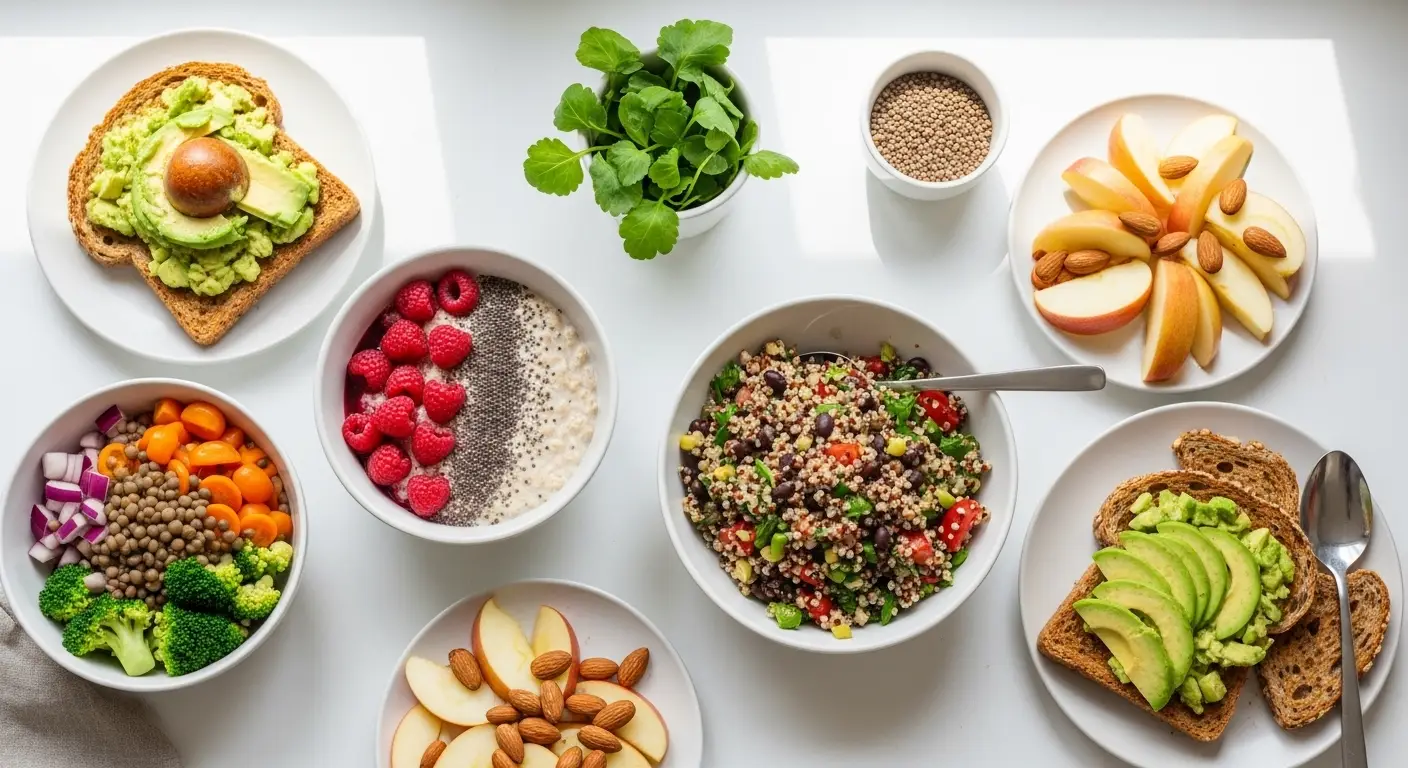
If you’ve ever wondered, what meals are high in fiber? — you’re not alone. Fiber has become one of the most talked-about nutrients in modern nutrition. And rightly so, for good reason.
In fact, high-fiber meals support digestive health, improve gut health, help regulate blood sugar levels, and even reduce the chance of many heart disease. Yet many people still fall short of their daily fiber intake.
Instead of just listing foods, this guide focuses on real, practical meals — including high fiber breakfast ideas, satisfying lunches, filling dinners, and smart snacks. You’ll also learn how to build a fiber-rich diet plan that supports a balanced diet, promotes satiety and fullness, and contributes to long-term wellness.
Let’s start with the basics.
Why High-Fiber Meals Are Essential for Digestive and Overall Health
Fiber is a form of carbohydrate found in plant meals. Unlike other carbs, your body cannot fully digest it. Instead, it moves through your digestive system and provides powerful health benefits along the way.
Understanding the dietary fiber benefits helps you make smarter meal choices.
Key Benefits of High-Fiber Meals
• Improves digestive health
• Supports a healthy gut microbiome
• Promotes regular bowel movements
• Helps with constipation relief
• Aids blood sugar control
• Supports a heart healthy diet
• Increases satiety and fullness, helping with weight management
• May lower cholesterol as part of cholesterol lowering foods
Additionally, fiber-rich meals are often made from plant-based nutrition, which includes fruits, veggies, whole grains, legumes, nuts, and seeds. These foods are also nutrient-dense foods, meaning they provide vitamins, minerals, and antioxidants alongside fiber.
Soluble vs Insoluble Fiber – What’s the Difference?
When planning high-fiber meals, it’s important to understand soluble vs insoluble fiber.
Soluble Fiber
Soluble fiber dissolves in water and forms a gel-like substance inside the gut. It helps:
- Lower cholesterol
- Improve blood sugar levels
- Support gut microbiome balance
Foods high in soluble fiber include:
- Oats
- Barley
- Lentils
- Apples
- Chia seeds
Insoluble Fiber
Insoluble fiber does not dissolve in water. It adds bulk to stool and helps everyday digestion.
Foods high in insoluble fiber include:
- Whole wheat
- Brown rice
- Carrots
- Leafy greens
- Nuts and seeds
A well-designed meal includes both types. For example, a bowl of oatmeal with berries and flaxseeds provides both soluble and insoluble fiber.
How Much Fiber Do You Need Per Day?
The recommended fiber intake varies by age and gender, but general guidelines suggest:
- Women: about 25 grams per day
- Men: about 30–38 grams per day
Many people consume far less than this.
For this reason, structured planning helps. In fact, a 30 grams fiber per day meal plan can easily be achieved by spreading fiber across meals:
- High fiber breakfast: 8–10 grams
- High fiber lunch ideas: 8–10 grams
- High fiber dinner recipes: 8–10 grams
- High fiber snacks: 3–5 grams
Checking grams of fiber per serving on food labels makes it easier to track intake.
What Meals Are High in Fiber? (Best High-Fiber Meal Ideas by Category)
Now let’s move from theory to practice.
Instead of focusing only on a high fiber foods list, it’s more helpful to build real meals using fiber-rich fruits and vegetables, whole grain high fiber foods, and legumes high in fiber.
Here are practical ideas you could use right away.
High Fiber Breakfast Ideas

To begin with, a smart morning meal sets the tone for the day. Likewise, a strong high-fiber breakfast supports digestion and keeps you full longer.
Examples:
1. Oatmeal with chia seeds and berries
- Oats (4g)
- Chia seeds (5g per tablespoon)
- Raspberries (8g per cup)
2. Whole grain toast with avocado and flaxseeds
- Whole grain high fiber foods provide complex carbs
- Avocado adds healthy fats and fiber
- Flaxseeds increase nuts and seeds fiber intake
3.Smoothie with spinach, banana, peanut butter, and oats
- Combines soluble fiber and insoluble fiber
- Great for gut microbiome support
These meals are also considered low glycemic index foods, helping with stable blood sugar levels.
High Fiber Lunch Ideas

Lunch is a perfect opportunity to add legumes high in fiber and whole grains.
Examples:
1.Quinoa and black bean salad
- Black beans (about 15g per cup)
- Quinoa provides high-fiber carbohydrates
- Add bell peppers and leafy greens
2. Lentil soup with whole grain bread
- Lentils are rich in fiber and protein
- Excellent example of plant-based high fiber meals
3. Chickpea and vegetable wrap (whole wheat tortilla)
- Combines beans and lentils fiber content
- Adds fiber-rich vegetables
Moreover, these meals support blood sugar control, enhance fullness, and fit into a heart-healthy diet.
High Fiber Dinner Recipes
Dinner should be balanced and satisfying without being heavy.
High fiber dinner recipes include:
1. Bean chili with mixed vegetables
- Kidney beans, black beans, tomatoes
- Excellent combination of complex carbs and protein
2. Whole wheat pasta with broccoli and spinach
- Whole grain base
- Fiber-rich fruits and vegetables
3. Baked sweet potato topped with lentils and tahini
- Sweet potatoes are nutrient-dense
- Lentils add plant-based protein and fiber
These meals also contain anti-inflammatory foods, supporting overall wellness.
High Fiber Snacks to Add Between Meals
Snacks can help you meet your daily fiber intake without overeating at main meals.
Smart high fiber snacks include:
• Apples or pears with skin
• A handful of almonds (nuts and seeds fiber)
• Carrot sticks with hummus
• Air-popped popcorn (whole grain high fiber food)
Furthermore, these are simple, portable, and promote satiety and fullness between meals.
Top High-Fiber Foods to Build Your Meals Around
Creating high-fiber meals becomes simple when you know which ingredients to prioritize. Instead of relying on supplements, focus on fiber-rich fruits and vegetables, whole grains, legumes, nuts, and seeds.
Here’s a practical breakdown you can use as a reference.
Fiber-Rich Fruits
Fruits are natural constipation relief foods and support overall digestive health.
Examples (approximate grams of fiber per serving):
- Raspberries – 8g per cup
- Pear (with skin) – 5–6g
- Apple (with skin) – 4–5g
- Banana – 3g
- Orange – 3g
These fruits contain both soluble and insoluble fiber, helping with blood sugar control and gut microbiome support.
High-Fiber Vegetables
Moreover, vegetables are essential in any balanced diet and provide powerful dietary fiber benefits.
Examples:
- Broccoli – 5g per cup
- Brussels sprouts – 4g per cup
- Carrots – 3–4g per cup
- Sweet potatoes (with skin) – 4g
- Spinach – 4g per cooked cup
Many of these are also considered anti-inflammatory foods and contribute to heart health.
Whole Grain High Fiber Foods
Additionally, whole grains are excellent sources of high-fiber carbohydrates and complex carbs.
Refined grains lose most in their fiber throughout processing. Choose whole options instead.
Examples:
- Oats – 4g per cup cooked
- Quinoa – 5g per cup
- Brown rice – 3.5g per cup
- Barley – 6g per cup
- Whole wheat pasta – 6g per cup
Furthermore, these foods help stabilize energy levels and support a heart-healthy diet.
Legumes High in Fiber (Beans and Lentils Fiber Content)
Moreover, legumes rank among the richest sources of fiber and play a crucial role in plant-based high-fiber meals.
Examples:
- Lentils – 15g per cup
- Black beans – 15g per cup
- Chickpeas – 12g per cup
- Kidney beans – 13g per cup
They also provide plant protein, making them ideal for plant-based nutrition and sustainable meal planning.
Nuts and Seeds Fiber
Small but powerful, nuts and seeds add both healthy fats and fiber.
Examples:
- Chia seeds – 10g per 2 tablespoons
- Flaxseeds – 5g per tablespoon
- Almonds – 3–4g per ounce
- Pumpkin seeds – 2g per ounce
They are easy to add to oatmeal, smoothies, salads, or yogurt.
High Fiber Meal Plan (Sample 30 Grams Fiber Per Day Plan)
If your goal is to reach the recommended fiber intake, planning ahead makes it easy. Below is a simple 30 grams fiber per day meal plan.
Breakfast (8–10g Fiber)
Oatmeal with:
- 1 tablespoon chia seeds
- ½ cup raspberries
- 1 tablespoon flaxseed
Approximate total: 9–10g fiber
Lunch (9–10g Fiber)
Quinoa and black bean bowl:
- ½ cup quinoa
- ½ cup black beans
- Mixed vegetables (spinach, bell peppers, carrots)
Approximate total: 10g fiber
Snack (4–5g Fiber)
Apple with a handful of almonds
Approximate total: 5g fiber
Dinner (8–10g Fiber)
Baked sweet potato topped with:
- ½ cup lentils
- Steamed broccoli
Approximate total: 9–10g fiber
Total daily fiber: 30–35 grams
So, This simple high fiber meal plan shows how easy it is to meet your daily fiber intake without extreme dieting.
Benefits of Eating High-Fiber Meals Regularly
When you consistently eat fiber-rich meals, the effects go beyond digestion.
1. Improved Digestive Health
Fiber adds bulk to stool and helps everyday bowel movements. It also feeds beneficial bacteria, promoting gut microbiome support.
2. Better Blood Sugar Control
High-fiber meals slow digestion, reducing blood sugar spikes. This is especially helpful when choosing low glycemic index foods.
3. Lower Cholesterol
Consequently, soluble fiber binds to cholesterol in the digestive tract, making fiber-rich foods effective cholesterol-lowering foods.
4. Weight Management
Fiber increases satiety and fullness, making it easier to manage calorie intake. Consequently, many weight loss foods are naturally high in fiber.
5. Heart Health
A diet rich in fiber supports a heart healthy diet by lowering inflammation and improving lipid profiles.
Common Mistakes When Increasing Fiber Intake
While fiber is useful, it should be increased gradually.
❌ Increasing Fiber Too Quickly
A sudden jump in fiber can cause bloating and discomfort.
❌ Not Drinking Enough Water
Fiber works best with adequate hydration.
❌ Relying Only on Supplements
Whole foods provide additional nutrients that supplements lack.
❌ Ignoring Variety of Fiber
A mix of foods high in soluble fiber and foods high in insoluble fiber ensures balanced digestive support.
Tips for Adding More High Fiber to Your Daily Meals
Here are practical ways to boost fiber intake naturally:
• Replace white rice with brown rice or with quinoa
• Choose whole wheat bread at the place of white bread
• Add beans and lentils to soups and salads
• Include vegetables in every meal
• Snack on fruits, nuts, and seeds
• Check labels for grams of fiber per serving
Small changes make a big difference over time.
FAQS
Many plant-based foods are naturally rich in fiber. The best options include:
Legumes high in fiber (lentils, black beans, chickpeas)
Whole grain high fiber foods (oats, quinoa, barley, brown rice)
Fiber-rich fruits and vegetables (raspberries, pears, broccoli, sweet potatoes)
Nuts and seeds fiber sources (chia seeds, flaxseeds, almonds)
Reaching 40 grams of fiber is achievable with structured planning. Here’s a simple approach:
Breakfast (10g)
Oatmeal + chia seeds + berries
Lunch (12–15g)
Lentil and quinoa bowl with mixed vegetables
Snack (5–7g)
Apple + almonds
Dinner (10–12g)
Black bean chili with brown rice
To meet 100% of your recommended fiber intake:
Include vegetables in every meal
Replace refined grains with whole grains
Add beans or lentils daily
Snack on fruits, nuts, and seeds
Track grams of fiber per serving using food labels
Common signs of low fiber intake include:
Constipation
Irregular bowel movements
Bloating
Feeling hungry shortly after meals
Blood sugar spikes
Raspberries are among the highest-fiber fruits, offering about 8 grams per cup.
Other high-fiber fruits include:
Pear (with skin) – 5–6g
Apple (with skin) – 4–5g
Avocado – 10g per cup
Some of the highest-fiber vegetables include:
Artichokes – 10g per medium vegetable
Brussels sprouts – 4g per cup
Broccoli – 5g per cup
Sweet potatoes (with skin) – 4g
Carrots – 3–4g per cup
