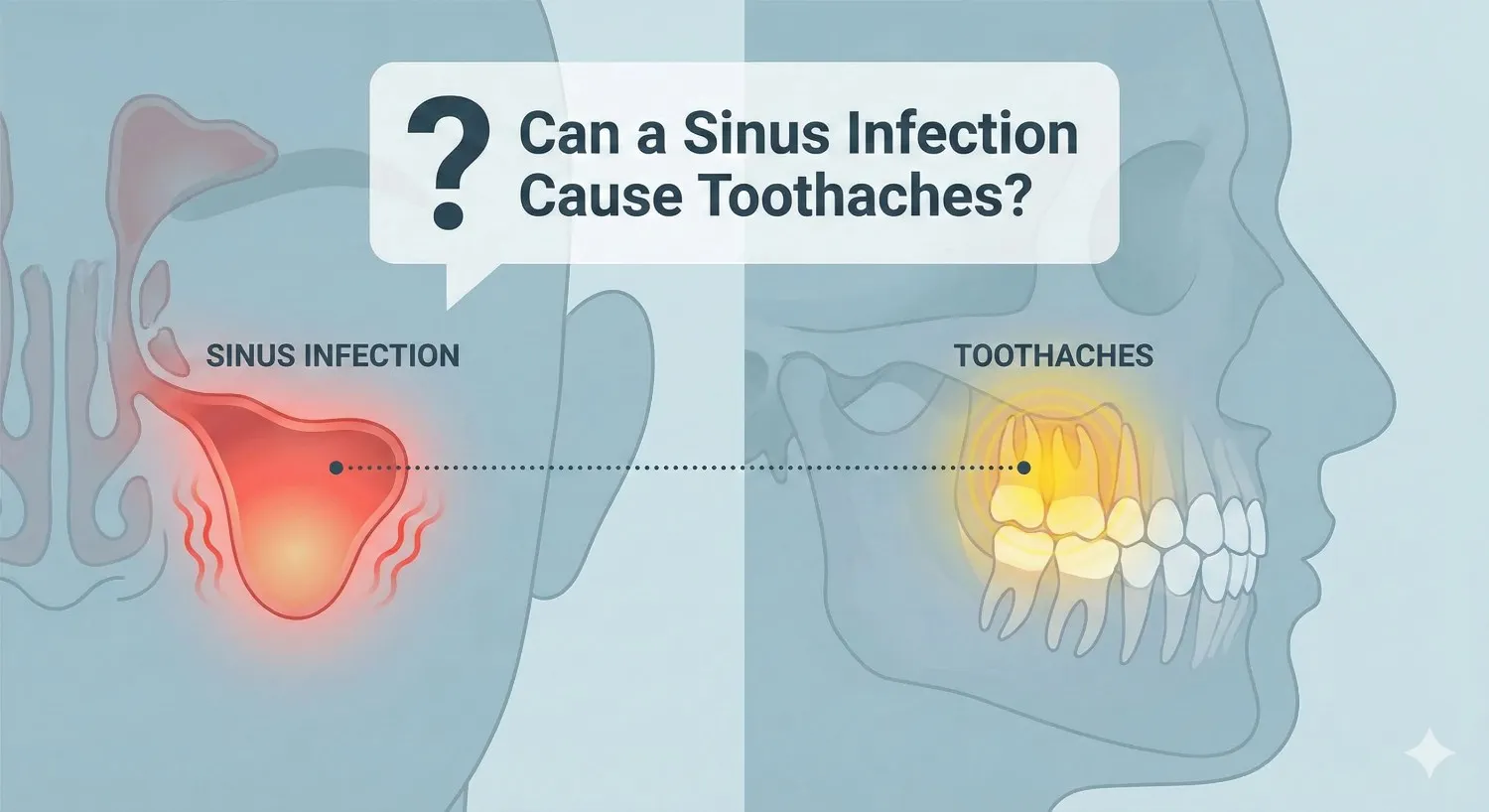
Can a sinus infection cause toothaches? Yes—and for many people, sinus-related tooth pain is one of the most confusing and uncomfortable symptoms of sinusitis. You might feel a dull ache, pressure, or throbbing pain in your upper teeth and wonder if you suddenly need dental work.
Sinus infection tooth pain often feels like a regular toothache, but the source isn’t your teeth at all. Instead, it comes from inflamed sinuses pressing on nearby nerves. This is why sinus pressure tooth pain is commonly mistaken for a dental problem, especially when it affects multiple upper teeth at once.
In this guide, we’ll explain how sinusitis and tooth pain are connected, what sinus-related toothache feels like, and how to tell the difference between dental pain and sinus pain—so you can take the right next step.
Understanding the Link Between Sinus Infections and Tooth Pain
To understand why a sinus infection can cause toothaches, it helps to know how closely your sinuses and teeth are connected. The upper teeth and the sinuses share nerves, blood supply, and physical space inside your face.
When a sinus cavity becomes inflamed or infected, pressure builds up—and that pressure can trigger pain signals that feel like they’re coming from your teeth.
Where the Sinuses Are Located in Relation to Your Teeth
The maxillary sinuses sit directly above your upper molars and premolars. In some people, the roots of these teeth are extremely close to—or even extend into—the sinus cavity.
Because of this close relationship:
- Sinus inflammation can irritate the nerves supplying the upper teeth
- Pressure inside the sinuses can cause upper molar pain
- Pain may be felt on both sides rather than in one specific tooth
This is why upper tooth pain with a sinus infection is so common, especially during sinus congestion or sinus headaches.
How a Sinus Infection Can Cause Toothaches
A toothache caused by a sinus infection is usually the result of pressure and nerve involvement—not tooth decay or gum disease. Several mechanisms are responsible for this type of pain.
Sinus Pressure and Nerve Compression
When you have sinusitis, the lining of your sinuses becomes swollen and filled with mucus. This leads to:
- Increased sinus pressure
- Facial pressure pain
- Compression of nearby nerves
As a result, you may experience sinus pressure tooth pain that feels deep, aching, or throbbing. This pain often worsens when bending forward, lying down, or during a sinus headache.
Referred Pain from the Sinuses
Sinus-related toothache is a classic example of referred pain, where discomfort is felt in a different area than the source of the problem.
Instead of pain coming from a single tooth, you may notice:
- Multiple upper teeth hurting at once
- Tooth pain with sinus congestion
- Sinus infection jaw and tooth pain occurring together
Because the nerves overlap, your brain interprets sinus inflammation as dental pain—even when the teeth themselves are healthy.
What Sinus-Related Tooth Pain Feels Like
Sinus-related toothache has a few clear patterns that set it apart from typical dental pain. Knowing these signs can help you avoid unnecessary dental treatments and focus on the real cause.
Symptoms That Point to a Sinus Infection
When tooth pain is caused by sinusitis, it often comes with classic sinus infection symptoms, such as:
- Facial pressure pain around the cheeks, eyes, or forehead
- Nasal congestion or a blocked nose
- Post nasal drip and sore throat
- Sinus headache and tooth pain occurring together
- Pain that gets worse when bending forward or lying down
If your tooth pain increases during a cold or sinus infection, sinuses are likely involved.
How Sinus Tooth Pain Differs from Dental Pain
Understanding dental pain vs sinus pain makes a big difference:
- Sinus-related toothache usually affects multiple upper teeth
- Dental pain is often sharp, localized, and focused on one tooth
- Sinus infection causing dental pain often feels like pressure, not stabbing pain
- Tooth sensitivity from cavities worsens with hot or cold foods, while sinus pain does not
Upper tooth pain during sinus congestion is one of the strongest clues that the cause is sinus-related.
Teeth Most Commonly Affected by Sinus Infections

Not all teeth are equally affected by sinus issues. The location of your sinuses plays a major role.
Upper Back Teeth (Molars and Premolars)
The teeth most commonly involved are:
- Upper molars
- Upper premolars
These teeth sit closest to the maxillary sinus, making them more sensitive to sinus inflammation and pressure buildup. Upper molar pain during a sinus infection is extremely common, even when the teeth themselves are healthy.
Can a Tooth Infection Cause Sinus Problems?
The connection between teeth and sinuses works both ways. While sinus infections can cause toothaches, dental infections can also trigger sinus issues.
When Dental Problems Spread to the Sinuses
A deep tooth infection in the upper jaw can spread into the sinus cavity, leading to:
- Sinus inflammation
- Facial pain
- Persistent sinus congestion
This overlap is why ongoing tooth or sinus pain should always be properly evaluated, especially if symptoms don’t improve.
How to Relieve Toothaches Caused by Sinus Infections
Once you know sinus pressure is the cause, relief becomes much easier and more effective.
Home Remedies for Sinus Pressure and Pain
For mild to moderate sinus-related tooth pain, try:
- Staying well hydrated to thin mucus
- Steam inhalation to relieve sinus pressure
- Warm compresses on the face
- Rest and elevation while sleeping
Reducing sinus pressure often reduces tooth pain at the same time.
Medical Treatments That May Help
If symptoms are stronger or last longer, treatment may include:
- Saline nasal sprays or rinses
- Decongestants (short-term use)
- Antihistamines if allergies are involved
- Antibiotics if a bacterial sinus cavity infection is diagnosed
Always follow medical advice, especially if pain is persistent.
When to See a Doctor or Dentist
Knowing when to seek help can prevent complications.
Signs You Should See a Doctor
- Sinus infection symptoms lasting more than 10 days
- Fever or worsening facial pressure
- Thick yellow or green nasal discharge
- Sinus headache and tooth pain that doesn’t improve
Signs You Should See a Dentist
- Pain limited to one tooth
- Tooth sensitivity to hot or cold
- Swelling of the gums or jaw
- Pain that persists after sinus symptoms clear
If you’re unsure, starting with a dentist can help rule out dental causes quickly.
How to Prevent Sinus-Related Toothaches

Prevention is especially important for health-conscious individuals.
Keeping Your Sinuses Healthy
- Manage allergies early
- Avoid dry indoor air
- Practice nasal hygiene
- Stay hydrated year-round
Maintaining Good Oral Health
- Brush and floss daily
- Schedule regular dental checkups
- Treat cavities early
Can a Sinus Infection Cause Toothaches? In simple words Yes!!!
Healthy sinuses and healthy teeth work together to prevent pain.
FAQS
Yes. The maxillary sinuses sit directly above the upper teeth, making upper tooth pain very common during sinus infections.
If multiple upper teeth hurt and pain worsens with congestion or bending forward, it’s likely sinus-related.
Dental infections usually affect one tooth and get worse with chewing or temperature changes. Sinus pain affects several teeth and comes with sinus symptoms.
Sinus inflammation increases pressure and irritates shared nerves, causing referred tooth pain.
Sinus-related tooth pain usually improves as the sinus infection clears—often within a few days to two weeks.
If pain persists after sinus symptoms resolve or affects only one tooth, a dental exam is recommended.

One Comment on “Can a Sinus Infection Cause Toothaches?”