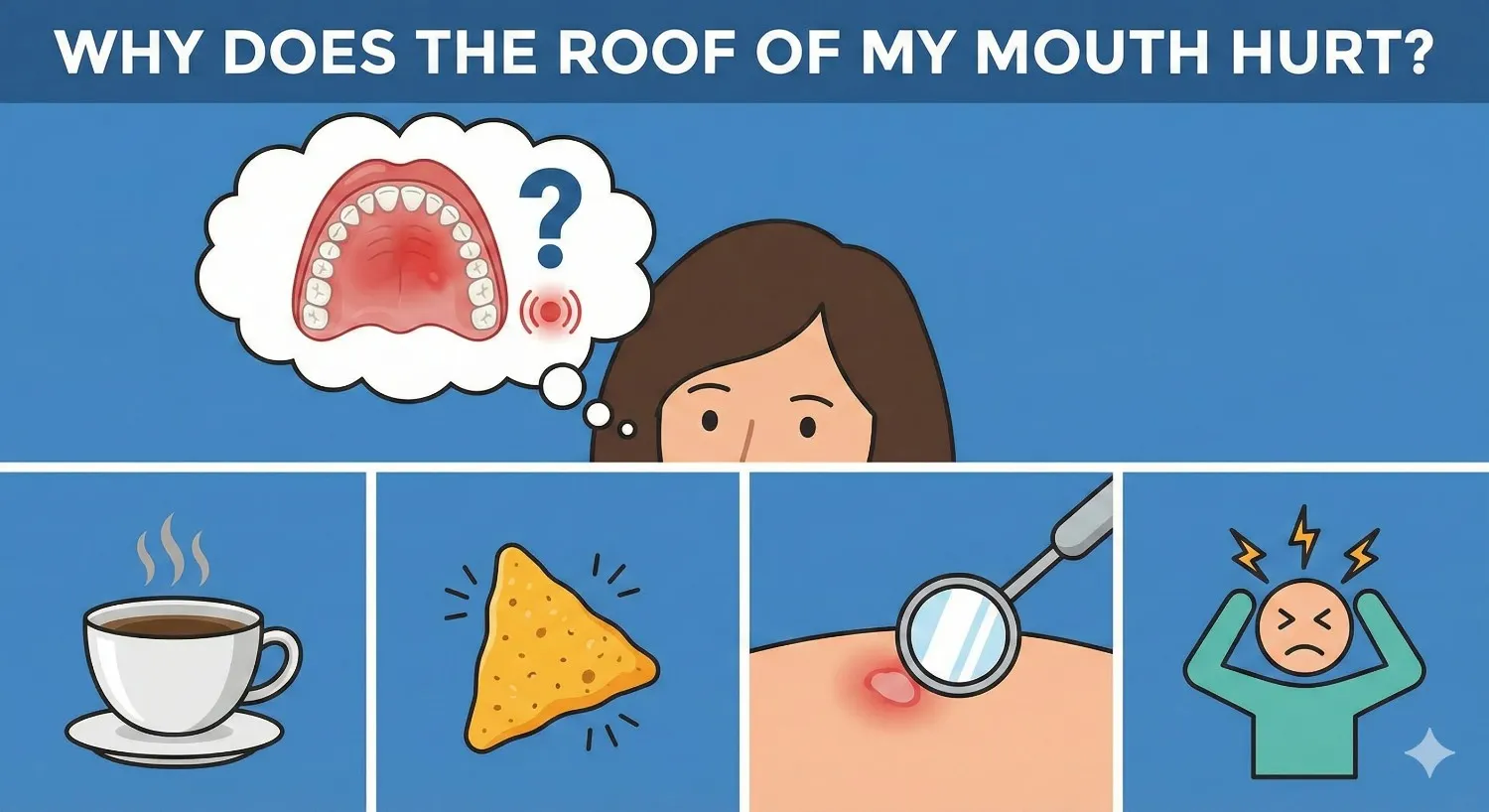
Ever taken a bite of food and suddenly thought, “Why does the roof of my mouth hurt?”
Pain in the roof of the mouth can catch you off guard—especially when it makes eating, drinking, or swallowing uncomfortable. This pain can show up as tenderness, a burning sensation, or even swelling that hurts to touch.
The good news about Why Does The Roof Of My Mouth Hurt is that most cases of a sore roof of the mouth are caused by common, treatable issues, such as hot food burns, mouth sores, or mild infections. Understanding the cause is the first step toward relief and peace of mind.
Understanding Pain on the Roof of the Mouth
The roof of your mouth, also called the palate, plays a key role in chewing, swallowing, and speaking. Because it’s full of nerves and blood vessels, even small problems can cause noticeable discomfort or oral inflammation.
Pain in this area may feel like:
- A burning sensation at the roof of the mouth
- Tenderness or soreness when touched
- Swelling or redness
- Roof of mouth pain when swallowing or eating
Understanding the structure of the palate makes it easier to understand why it gets sore so easily.
What the Roof of the Mouth Is Made Of
The palate has two main parts:
- Hard palate: The firm, bony front part of the mouth roof. Hard palate pain is often linked to burns, injuries, or mouth ulcers.
- Soft palate: The softer, flexible area toward the back of the mouth. Soft palate pain is more commonly linked to infections, sinus problems, or illness.
Because the palate is constantly exposed to hot foods, sharp textures, bacteria, and allergens, it’s vulnerable to irritation and mouth infection symptoms. That’s why a sore palate can develop quickly, sometimes even overnight.
Common Reasons Why the Roof of My Mouth Hurts

In most cases, a sore roof of the mouth is caused by everyday factors rather than serious disease. Below are the most common sore palate causes doctors and dentists see.
Burns from Hot Food or Drinks
One of the top reasons for roof of mouth pain suddenly is a mouth burn injury. Hot pizza, tea, or soup can easily burn the delicate tissue on the hard palate.
Common signs include:
- A burning sensation at the roof of the mouth
- Pain that gets worse when eating
- Tender or peeling skin
These burns usually heal on their own within a few days, but they can be uncomfortable.
Mouth Sores and Canker Sores
A canker sore on the roof of the mouth can cause sharp or aching pain, especially when swallowing. These small mouth ulcers are not contagious and may be triggered by:
- Stress
- Minor injuries
- Nutrient deficiencies
They often appear as white or yellow spots with red edges and are a common cause of oral pain.
Allergic Reactions and Food Sensitivities
If your roof of mouth pain happens after eating, food allergies may be the reason. Oral allergy syndrome can cause itching, swelling, or soreness shortly after consuming certain fruits, nuts, or raw vegetables.
Symptoms may include:
- Swollen roof of mouth
- Tingling or itching
- Pain that fades after a short time
Sinus Infections and Nasal Congestion
A sinus infection can cause pressure that feels like pain in the roof of the mouth. This happens due to dental pain referral, where sinus pressure affects nearby nerves.
You may notice:
- Roof of mouth pain when sick
- Facial pressure or headache
- Nasal congestion
This type of palate pain often improves as the sinus infection clears.
Less Common but Serious Causes of Roof of Mouth Pain

While most cases of palate pain are harmless, some causes require closer attention—especially if symptoms are persistent or worsening. Being aware about these possibilities helps you act early.
Trauma or Injury to the Mouth
Physical injury can make the roof of your mouth tender or painful to touch. This may happen from:
- Accidentally scratching the palate with sharp food
- Dental procedures or orthodontic appliances
- Repeated friction from hard or crunchy foods
Injuries can lead to oral inflammation and may increase the risk of infection if the area doesn’t heal properly.
Oral Infections (Viral, Bacterial, or Fungal)
Infections are a common reason for ongoing pain in the roof of the mouth. These may include:
- Oral thrush, a fungal infection that causes white patches and soreness
- Viral infections, which can lead to mouth sores and soft palate pain
- Bacterial infections, often linked to gum disease or untreated dental issues
Mouth infection symptoms may include redness, swelling, bad breath, or pain that doesn’t improve.
Autoimmune and Inflammatory Conditions
Certain autoimmune disorders can cause recurring mouth ulcers or sore palate symptoms. these conditions may lead to chronic oral ache and inflammation. While less common, they should be considered if pain keeps returning without a clear cause.
Oral Cancer Warning Signs
Though rare, persistent pain in the roof of the mouth should not be ignored. Warning signs may include:
- Pain lasting longer than two weeks
- Lumps, thickened areas, or unexplained bleeding
- Color changes that don’t heal
Early evaluation is key, especially if pain doesn’t respond to home care.
Symptoms That Often Come with Roof of Mouth Pain
Pain rarely comes alone. Paying attention to accompanying signs and symptoms can help identify the cause.
Common symptoms include:
- Swollen roof of mouth
- Redness or white patches
- Burning or stinging sensations
- Roof of mouth pain when swallowing
- Tender roof of mouth that hurts to touch
If symptoms worsen or spread, it may signal infection or a deeper issue.
How to Relieve Pain on the Roof of Your Mouth at Home
For mild to moderate cases, simple self-care steps can ease discomfort and support healing.
Natural Remedies and Daily Habits
Try the following:
- Rinse with warm salt water to reduce inflammation
- Drink plenty of water to avoid dry mouth
- Avoid spicy, acidic, or very hot foods
- Choose soft foods while healing
These steps are especially helpful for mouth sores or minor burns.
Over-the-Counter Relief Options
You may also consider:
- Oral gels for mouth ulcers
- Mild pain relievers if needed
- Alcohol-free mouth rinses
Always follow instructions and avoid using products that irritate sensitive tissue.
When You Should See a Doctor or Dentist
You should seek professional care if:
- Pain lasts longer than 7–10 days
- The roof of your mouth becomes increasingly swollen
- You experience fever or signs of infection
- Roof of mouth pain appears suddenly and severely
A healthcare provider can determine whether the issue is related to infection, sinus problems, or another medical condition.
How to Prevent Roof of Mouth Pain
Prevention is often simple and effective, especially for health-conscious individuals.
Helpful tips include:
- Let hot food cool before eating
- Maintain good oral hygiene
- Stay hydrated
- Address sinus congestion early
- Avoid known food triggers
These habits can reduce the risk of sore palate causes and recurring discomfort.
FAQS
This may be due to mouth sores, infection, or inflammation of the gentle palate. Sinus infections can also cause pain during swallowing.
Yes. Stress can weaken immunity and trigger mouth ulcers or inflammation, leading to tenderness and soreness.
This is often linked to hot foods, acidic ingredients, or oral allergy syndrome. The pain usually appears shortly after meals.
Minor issues like burns or small ulcers usually heal within a week. Pain lasting longer should be checked by a professional.
Most cases are harmless, but persistent pain, swelling, or unexplained changes should always be evaluated to rule out serious situations.

One Comment on “Why Does The Roof Of My Mouth Hurt”