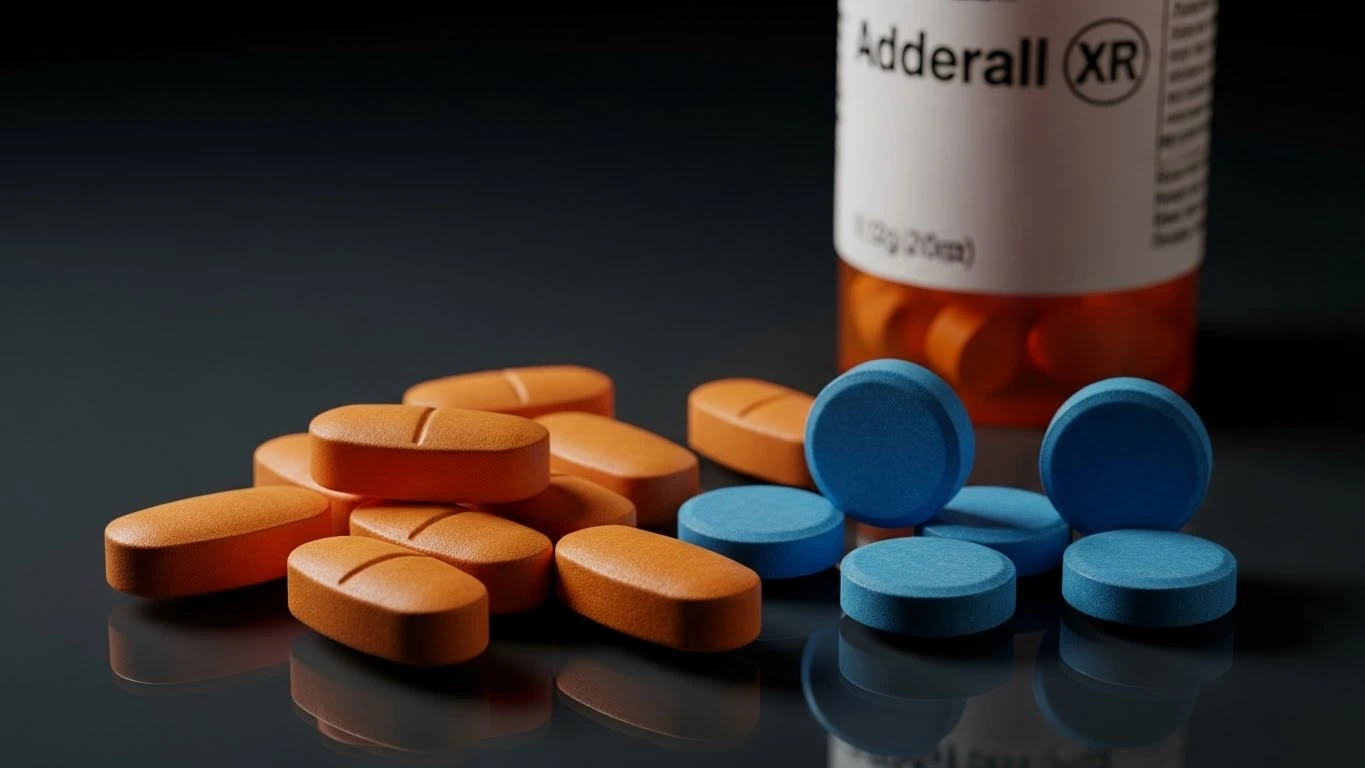
Ever wonder why Adderall lingers in your body longer than you expect? If you take it for ADHD or narcolepsy, knowing its stay can help with doctor visits or job checks. Adderall mixes amphetamine and dextroamphetamine salts to boost focus and energy. The big question: How long does Adderall stay in your system? This matters for safe use, passing tests, or just feeling normal after a dose.
The Basics of Adderall Half-Life and Metabolism
Half-Life Variability in Individuals
How long does Adderall stay in your system?
A drug’s half-life means the time needed to cut its level in your blood by half. For Adderall, this ranges from 9 to 14 hours in most adults. Kids might see a shorter time, around 7 to 8 hours. This half-life sets how fast the drug fades from your bloodstream at first.
Think of it like ice melting in warm water. The first half goes quick, but leftovers take longer to vanish. Immediate-release Adderall clears faster than extended-release versions. Your body’s unique setup changes this rate a bit.
The Role of Metabolism and Excretion
Your liver breaks down Adderall into harmless bits. It turns the active parts into compounds your body can dump. Most of it leaves through urine, about 30 to 40 percent unchanged. The rest gets changed in the liver before exit.
Kidneys filter it out based on your urine flow. If you drink plenty, it might speed things up a tad. Enzymes in the liver handle the main work, making sure the drug doesn’t build up too much.
Immediate-Release vs. Extended-Release Formulations
Immediate-release Adderall hits fast and drops off quick. You feel effects in 30 minutes, peaking in 3 hours, then gone in 4 to 6 hours. Detection follows suit, shorter in blood or urine.
Extended-release, or XR, spreads the dose over time. It lasts 8 to 12 hours for effects, so it sticks around longer overall. If you take XR, expect a wider window for tests. Doctors pick based on your needs, like all-day focus without peaks and crashes.
This choice affects how long Adderall stays detectable. IR suits short tasks; XR fits school or work days.
Drug Testing Methods and Associated Detection Windows

Urine Drug Screening (UDS)
How long does Adderall stay in your system?
Urine tests catch Adderall most often in jobs or sports. They spot amphetamines for 1 to 3 days after last use. For one dose, it might be just 24 hours. Heavy use stretches it to 4 or 5 days.
Labs look for traces above 300 ng/mL for standard screens. Workplace tests use this cutoff; medical ones might go lower. False positives from cold meds happen, so confirm with a doc.
Blood Tests for Adderall Detection
Blood draws show recent use best. Adderall appears in blood for 12 to 24 hours, up to 2 days max. It’s not common for routine checks but useful in ERs or accidents.
Doctors use it to check levels right now. If you’re driving or in a crash, this test proves impairment. Levels peak fast after a dose, then drop sharp.
Hair Follicle Testing
Hair tests look back months. They detect Adderall up to 90 days after use. A 1.5-inch sample covers three months of growth.
This method shows patterns, not one-time slips. For prescribed Adderall, it flags steady intake. Courts or high-stakes jobs use it for long-term views. But it misses very recent doses, as hair needs time to grow.
Key Factors That Influence How Long Adderall Stays in Your System
Urinary pH Levels: The Acidic/Alkaline Factor
Urine pH changes how fast Adderall leaves. Acidic urine, below 5, pushes it out quicker. Alkaline urine, over 7, traps it longer, up to double the time.
Studies show acidic conditions speed clearance by 50 percent or more. Foods or meds shift pH, so watch what you eat. This factor surprises many, but it’s key for detection times.
Dosage, Frequency, and Duration of Use
Higher doses mean longer stays. A 10mg pill clears faster than 30mg. Daily use builds up, reaching steady levels after a week.
Occasional users clear in 1-2 days via urine. Chronic folks might take 7 days or more. Non-prescribed binges extend it way further, risking health issues too.
Compare a single ADHD dose to party use. The first fades quick; the second lingers like an uninvited guest.
Individual Physiological Differences
Your kidneys and liver set the pace. Weak kidneys slow excretion, stretching detection. Liver issues do the same for breakdown.
Age plays in: older adults clear slower due to less enzyme action. Body weight matters; more fat might hold traces. Hydration helps flow, but dehydration drags it out.
Kids process it faster than teens or adults. Genetics tweak enzyme speed too. No two bodies match, so timelines vary wide.
Strategies for Enhancing or Managing Adderall Clearance
Medical Adjustments and Hydration (When Appropriate)
Stay hydrated to aid kidney work. Goal for 8 glasses of water a day. It dilutes urine but doesn’t cheat tests much.
Talk to your doctor about dose tweaks if clearance worries you. They might switch formulations. Avoid overdoing water; it flags dilution in labs.
Simple steps like this keep things natural. Don’t force it; let your body do its job.
Dietary Considerations
Acidic foods like oranges or cranberries might acidify urine, speeding exit. Drink lemon water or eat vitamin C-rich stuff. Alkaline foods, such as bananas, could slow it.
These tips work best around dose time, per research. For example, citrus juice with Adderall cuts half-life short. But effects aren’t huge for past doses.
Try a balanced meal plan: yogurt for acid, greens for balance. Always check with a pro before big changes.
The Importance of Communication with Prescribing Physicians
If you have a script, tell testers upfront. Show your bottle or doctor’s note. This explains positives as legit use.
Your doc can write a letter verifying need. Labs accept this for valid prescriptions. Hiding it leads to headaches.
Build trust: chat early about tests. It saves stress and keeps compliance smooth.
Conclusion: Summary of Adderall Detection Timelines
The question was How long does Adderall stay in your system? in short Adderall’s stay depends on many things, from half-life of 9-14 hours to test types. Urine spots it 1-3 days usually; blood 1-2 days; hair up to 90. Factors like pH, dose, and your body shift these windows.
For safe use, track your patterns and talk to doctors. If facing a test, plan ahead with hydration and honesty. Understand your Adderall detection time to stay on top.
Takeaway: One dose clears quick for most, but habits change it. Stay informed, use as prescribed, and consult pros for personal advice. You’ve got this—knowledge beats worry every time.
FAQS
Yes. Adderall contains amphetamines, which are commonly screened for in drug tests.
Yes. Adderall can be detected in a urine test, usually for 1–3 days after use (sometimes longer depending on dose and metabolism).
