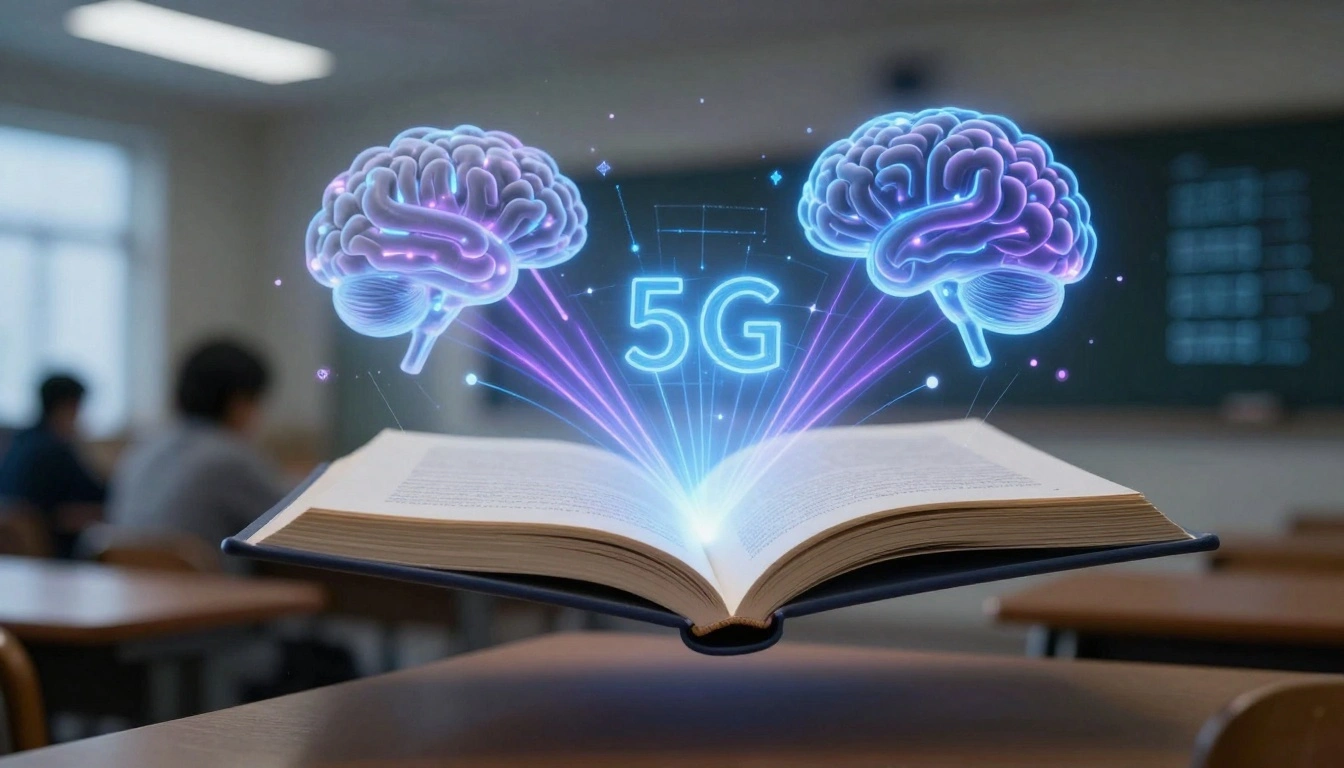
Imagine a classroom where kids dive into ancient Egypt without leaving their desks. Or a remote student joins a lab experiment in real time from miles away. That’s the promise of 5G technology in education. This next-gen network goes way beyond faster phone downloads. It brings ultra-low latency and connects tons of devices at once. Schools need this for tools like AR and VR, plus smooth remote classes. In this article, we’ll look at how 5G technology in education changes K-12 and college learning. We’ll cover its benefits, cool uses, challenges, and what’s next.
Understanding 5G’s Core Benefits for Educational Infrastructure
Schools often struggle with spotty Wi-Fi. It slows down videos or crashes during online tests. 5G technology in education fixes that with strong signals and smart tech. It handles massive loads without breaking a sweat. Let’s break down why this matters for school setups.
Ultra-Low Latency for Real-Time Applications
5G cuts wait times to almost zero. Think about controlling a robot arm in a science class. With 4G, there’s a lag that makes it frustrating. But 5G responds in milliseconds. This works great for remote surgery demos in med school or guiding drones in engineering lessons. Students get instant feedback, which keeps them hooked.
Massive Machine-Type Communications (mMTC) and Device Density
One big win is linking heaps of gadgets. 5G supports up to a million devices per square mile. Picture a school with every kid on a tablet, plus smart boards and sensors everywhere. No more dropped connections in a packed auditorium. This setup powers one-to-one tech programs. It also lets IoT track room temps or even alert staff to issues fast.
Enhanced Mobile Broadband (eMBB) Capacity
Speeds? 5G blasts past 4G or old Wi-Fi. It hits up to 10 times faster rates. Now, a whole class can stream 4K videos without buffering. Researchers upload huge data files in seconds. Cloud apps run smooth across campus. No more waiting for that big project to load. This levels the playing field for all students.
Immersive Learning Experiences Powered by 5G Connectivity

Gone are the days of just reading textbooks. 5G lets learning feel real and hands-on. It shifts kids from watchers to doers. High-speed links make interactive tools shine. Here’s how it sparks new ways to teach.
Augmented Reality (AR) and Virtual Reality (VR) in Classrooms
AR overlays digital info on the real world. With 5G, virtual field trips to the pyramids load quick. No glitches mid-tour. In colleges, med students practice on VR patients. Engineering classes build virtual bridges together. Pilots in places like South Korea have tested this. One program let kids explore space stations. Results? Better retention and excitement.
- Virtual history walks: Walk through Rome as it was.
- Science sims: Dissect frogs without mess.
- Group projects: Share VR spaces instantly.
This tech pulls students in deep.
Enhanced Remote and Hybrid Learning Models
5G makes distance classes feel close. Hybrid setups mix in-person and online without hiccups. Students tweak a digital model, and the teacher sees it right away. Vocational schools use “digital twins” for trades like plumbing. Remote labs let kids from rural spots join city experiments. No lag means fair play for all.
Actions sync up fast. A kid adjusts a virtual microscope. The class sees the focus shift live. This builds teamwork across miles.
Personalized and Adaptive Learning Systems
AI tutors need quick data flows. 5G delivers that. Platforms spot weak spots and switch lessons on the fly. No delays mean smooth adjustments. A student struggles with math? The app pulls up a video quiz instantly. This tailors paths to each learner. Studies show it boosts scores by 20-30%. Kids stay engaged when it fits their pace.
Transforming Campus Operations and Accessibility
5G doesn’t just help students. It streamlines the whole school. From lights to locks, everything connects better. This cuts costs and opens doors for more kids.
Smart Campus Management and IoT Integration
IoT sensors on 5G watch air quality in real time. They tweak vents to save energy. Security cams spot intruders fast. Lost gear? Track it with tags. In big universities, this means fewer mix-ups. One school in California cut utility bills by 15% this way. Staff focus on teaching, not fixes.
- Energy savers: Lights dim when rooms empty.
- Safety boosts: Alerts for hazards like leaks.
- Easy tracking: Books and tools stay in place.
Ops run smoother overall.
Bridging the Digital Divide with Fixed Wireless Access
Not every school has fiber lines. 5G FWA beams internet like a super Wi-Fi. It’s cheap for rural areas. No digging trenches needed. Programs in the US, like FCC grants, roll this out. One district in Texas hooked up 20 schools last year. Kids now access online resources equal to city peers. This closes gaps fast.
Improving Accessibility for Students with Disabilities
Reliable 5G powers aids that change lives. Real-time captions for deaf students work without skips. Voice controls help those with motor issues. Telehealth links counselors quick. In one pilot, blind kids used AR audio guides flawlessly. No connection drops mean full inclusion. Everyone gets a fair shot.
Implementation Hurdles and Strategic Considerations
Jumping to 5G sounds great. But it’s not simple. Schools face real roadblocks. Smart planning turns hurdles into steps forward.
Infrastructure Investment and Cost Analysis
Upgrades cost money. Small cells go inside buildings for coverage. New routers handle 5G signals. Spectrum fees add up too. Start small with pilots. Grants from groups like the Department of Education help. A mid-size school might spend $500K upfront. But savings in bandwidth pay back over time. Weigh needs against budget carefully.
Security and Data Privacy in a Hyper-Connected Ecosystem
More devices mean more risks. Hackers could grab grades or videos. Follow rules like FERPA to protect info. Use strong encryption on networks. Train staff on threats. Regular checks keep things safe. One breach could hurt trust. Build walls around student data from day one.
Professional Development and Curriculum Integration
Teachers need training. Not just buttons, but new lesson designs. Workshops show how to weave VR into history. Start with short sessions. For pilots, pick one class to test. Gather feedback. Adjust as you go. This builds buy-in. Soon, 5G feels natural in daily plans.
- Train in batches: Avoid overload.
- Redesign units: Mix tech with old methods.
- Measure wins: Track engagement rises.
Conclusion: Charting the Course for 5G-Enabled Education
5G technology in education flips the script on learning. It brings immersive tools like AR and VR to life. Ops get efficient with smart IoT. Accessibility opens for all kids. But success needs planning in tech, funds, and teaching shifts. By 2030, most schools could run on 5G. Start now—pilot a project. Your students will thank you. What’s your first step toward this connected future?
